
News
Some basic knowledge about fire protection
12/11/2022
Dong Nam Fire Protection introduces you to some basic knowledge about fire protection. To apply this knowledge, you can refer to some more specific fire alarm systems, such as automatic fire alarm systems and addressable fire alarm systems. Please follow the following articles:
Dong Nam Fire Protection introduces to you some basic knowledge about fire protection. To apply this knowledge, you can refer to some more specific fire alarm systems such as automatic fire alarm systems and addressable fire alarm systems. Please follow the following article:
*
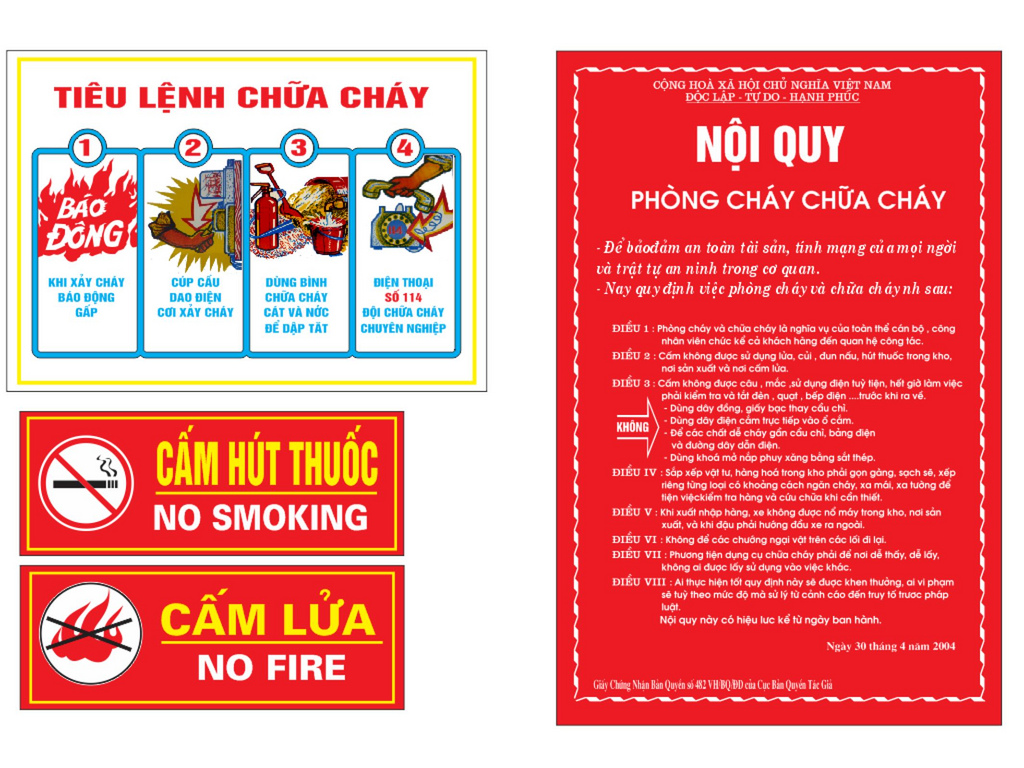
Firefighting order:
- In case of fire, give an urgent alarm.
- Turn off the circuit breaker where the fire broke out.
- Use fire extinguisher, sand and water to extinguish.
- Phone number 114, professional firefighting team.
* Common types of fire extinguishers, features and effects of each type: There are 5 common types of fire extinguishers, with different features and effects. Detail: Firstly, water, usually fish available in ponds, lakes, wells, tanks... has the effect of fighting fires: - Used to extinguish fires on solid substances such as wood, plastic...
- Firefighting of some flammable liquids and gases when conditions are met, in special cases a decision of the firefighting commander is required. - Water should not be used to fight fires on electrical equipment, highly active metals such as Na, K, Ca, lamp soil... and fires with temperatures above 1700ºC. Do not use water to fight gasoline and oil fires when there are insufficient conditions. to sue. The second is sand, like water, this is a common material and simple to use. - The firefighting effect of sand is to suffocate, causing the fire to stop, that is, separating the fire from oxygen. For flammable liquids, sand also helps prevent the spread of fire.
- However, sand must be prepared in advance in tanks and pits along with means such as buckets and shovels that can be used immediately when needed. Third is firefighting foam, currently there are two types of foam: air foam and water foam. Fire fighting effects: - Isolate the surface between flammable substances and air, limit evaporation (cold draft) of flammable substances. - Used to fight liquid fires such as gasoline, oil, oil bunker fires, tunnels, basements, etc. - Do not use fire extinguishing foam to extinguish fires on electrical equipment, fires on highly reactive metals such as clay, and fires with temperatures above 1700ºC. Fourth is fire extinguishing powder, fire extinguishing powder is stored in fire extinguishers, and has the following effects:
- Fire fighting of flammable substances, solid materials, liquids, and gases.
- Do not use to extinguish fires on electrical equipment. Do not use to extinguish fires on electronic equipment.
- The fifth is CO2 gas, CO2 gas is stored in fire extinguishers, effects:
- Fire fighting of flammable liquids, solids, and gases.
- Electrical fire fighting is highly effective in closed spaces.
- Note: Do not use CO2 to fight metal fires, alkaline earth fires, fires with temperatures above 1000ºC, do not fight electrical fires with voltage: U > 380KV. In addition, in small fires, combustibles and common materials can use some other fire extinguishing agents such as sand, fine soil, tarpaulin and wet towels...
Tags: fire protection
Product portfolio
Online support
Ms. Nguyen (Vice president)
Mr. Tam (Design consultancy)
Mr Đong (Technicians)
Ms Ngan (Accountant)
Sales manager
Mr. Khoa (Deputy business)
Ms Duy( Deputy business)
Ms Thao (Deputy business)
Mr Nghi (Deputy business)
Mr Dong (Deputy business)
Mr Thai (Deputy business)
Ms.Nhi ( Deputy business)
Mr Hy (Delivery)
Have 0 comment, evaluate about Some basic knowledge about fire protection
TVAdministratorsAdministrators
Welcome, honored guests. Please leave a comment, we will respond soon