
Discover CO2 fire extinguishers
Structure of the fire extinguisher with liquefied CO2 (carbonic). The body of the flask is made of vertical cylindrical cast steel and is painted red. Valve cluster made of copper alloy with 1-way screw valve structure - Russian, Polish ..., or normally closed 1-way compression spring valve, with upper trigger, trigger is also a handle - Chinese, Japanese...
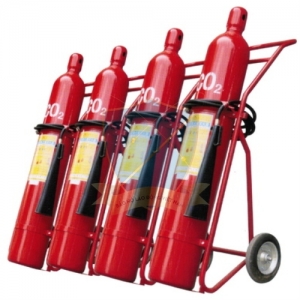
- Inside the tank and under the valve is a hard plastic pipe that leads liquid carbon out. On the valve assembly there is a safety valve, the valve works when the pressure in the tank increases above the specified level, the valve will release the gas to ensure safety.
- The nozzle is made of metal, rubber or hard plastic and is attached to the valve coupling through a hard steel pipe or soft xifong pipe. Vessels are usually painted red - except Polish vases which are painted white and Chinese CDE vases which are painted black. CO2 gas is tightly compressed in the tank under high pressure and will turn into liquid, so when fighting a fire, just turn the valve or pull the trigger and CO2 gas will be sprayed out to extinguish the fire. This is a self-injecting fire extinguisher.
- The firefighting mechanism of CO2 is to dilute the concentration of flammable vapor in the fire area and in addition, it also has a cooling effect because liquid CO2 will absorb heat when evaporating.
Scope of use, storage and inspection.
+ Scope of use of CO2 tank. Carbon dioxide fire extinguishers are often used to put out fires on electronic equipment, precious objects or food because when sprayed, CO2 fire extinguishing agent is not left on the burning object, so it does not further damage the object. This type of extinguisher is suitable for fires in chambers, rooms, tunnels, and sheltered places. It is less effective for outdoor fires or well-ventilated places because CO2 diffuses quickly in the air. Absolutely do not use CO2 cylinders to extinguish coal or red-hot metal fires, because when CO2 gas combines with gases produced from coal, it creates toxic and highly explosive gases.
+ Preserve and check the tank Keep it in a place that is easy to find and take. If you keep it outside, it must be covered, avoid places with sunlight, strong radiant heat, and high temperatures. Used or damaged gas cylinders should be kept separate to avoid confusion when fighting fires. When storing, it is necessary not to put the bottle near heat-generating equipment and machinery.
+ When moving the tank, avoid strong impacts. Must regularly check the tank, re-tighten the nuts, and check to avoid clogged taps and stuck valves. Check by observation and weighing and compare with the original weight. Before each new gas fill and after 5 years of use, the tank shell must be tested for hydrostatic pressure. You can check by dipping in water to check the tightness of the tank. Must regularly check the tank according to the manufacturer's regulations or at least once a month. If the gas weight decreases by more than 20%, the gas must be refilled.
Have 0 comment, evaluate about Discover CO2 fire extinguishers
TVAdministratorsAdministrators
Welcome, honored guests. Please leave a comment, we will respond soon